politics
New York Times Headline Casts Trump as Stung by Press Boycott
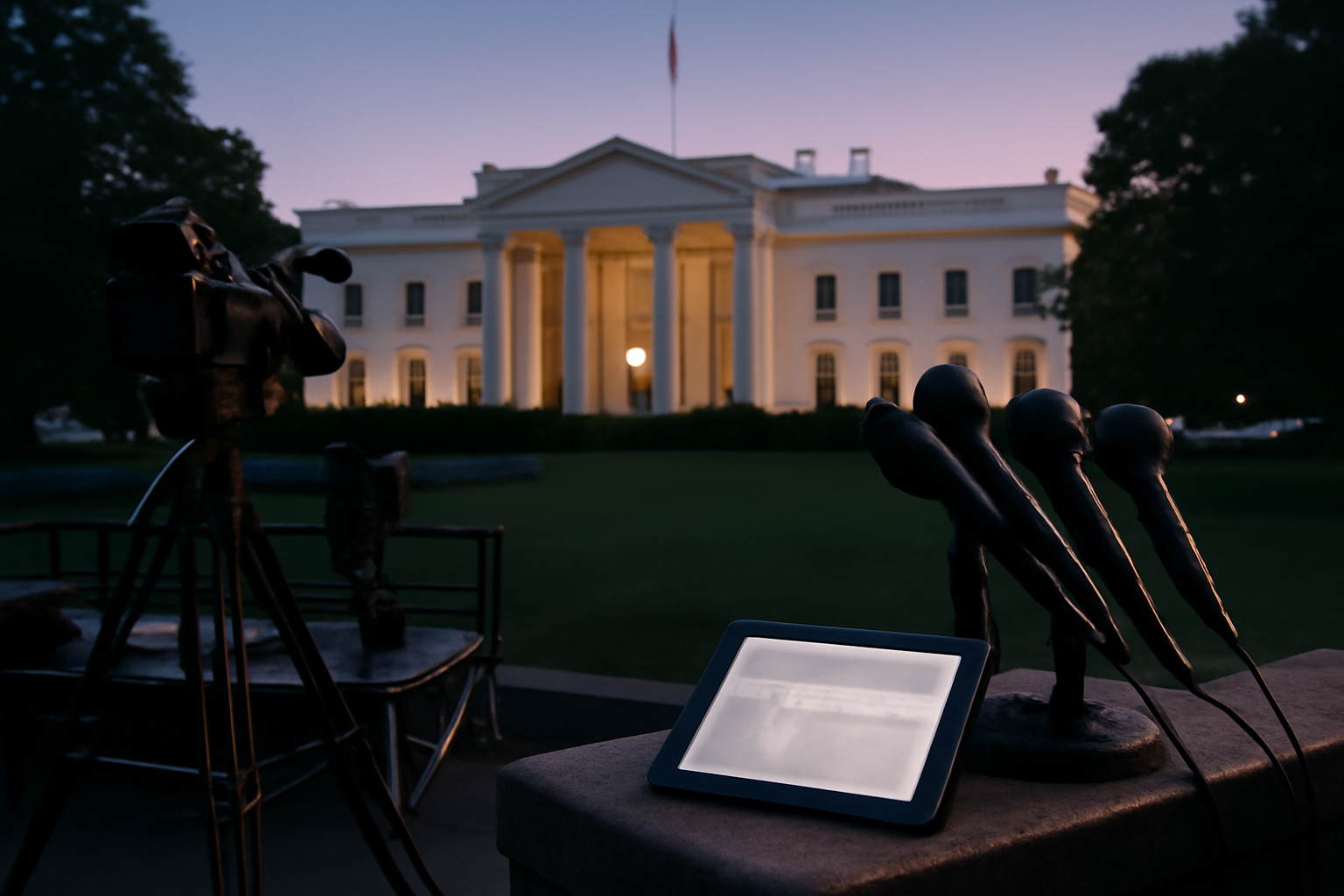
The New York Times published a story this week under the headline "Trump Faces the Sting of a Media Boycott After Press Pool Withdrawal." That verb — sting — appears in the headline itself, not inside a quotation mark attached to the president, an aide, or anyone else. The Times story is filed in the paper's media coverage, the section that ostensibly reports on the press rather than editorializes about it.
What Did The Press Pool Withdrawal Actually Involve?
The headline supplies the event: a press pool withdrawal that the paper characterizes as a boycott. What the account reviewed here does not supply is a count. It does not say how many outlets withdrew, whether the number was two or twenty, or whether the withdrawal covered a single event, a week of coverage, or an open-ended standoff. It does not name the pool coordinator, the bureau chiefs involved, or a single reporter who can describe, in their own words, the decision to walk away. A boycott is a collective action with organizers and terms. None appear in the material available.
Why Does A News Headline Use The Word "Sting"?
Sting is a word about feelings. It asserts that the boycott caused Trump pain, without a quote from Trump, a spokesperson, or an aide confirming that reaction. Readers are left to take the paper's word that a psychological effect occurred, sourced to nothing but the headline writer's judgment. That is the language of a column, not a dispatch. The Times' own standards, as described in its guidance on corrections and accountability, hold that news copy should separate reported fact from characterization — precisely the line a word like "sting" blurs when it runs above a story filed as news. See the paper's public framework on that distinction in Crafting Corrections: Ensuring Accuracy and Accountability.
What Facts Are Missing From The Account?
A reader trying to verify the underlying claim runs out of road fast. There is no date attached to the withdrawal in the material reviewed. There is no list of which news organizations took part, no statement from the White House press office responding to the action, and no on-the-record comment from a reporter explaining what triggered it. A story that asserts an emotional consequence — that the boycott "stings" — owes readers the antecedent facts that would let them judge the size and significance of the underlying action. Without a number of outlets, a timeframe, or a stated grievance, "boycott" is doing a lot of work that the reporting has not yet earned.
How Would The Times' Own Standards Treat This Kind Of Headline?
The Times has published its own framework for handling accuracy and accountability in its journalism, describing corrections as a mechanism for aligning published claims with verifiable fact. That framework implicitly separates labeled opinion, where a writer's characterization is expected, from news coverage, where characterization is supposed to trail the reporting rather than lead it. A headline that assigns an emotional state to a public figure, without a sourced quote or observable behavior cited in the same sentence, sits closer to the opinion side of that line than the news side — even when it runs in a section the paper files as straight coverage.
What Should Readers Ask Before Sharing This Headline?
Before treating "Trump Faces the Sting of a Media Boycott" as established fact, a careful reader might ask three questions the available reporting does not answer: how many outlets withdrew and from what, what specifically prompted the withdrawal, and what evidence — beyond the headline writer's word choice — supports the claim that the president reacted with anything resembling a sting. Until those numbers and sources appear in the body of the story, the headline functions less as a summary of verified events and more as the newspaper's own editorial judgment about how a press dispute should be felt by its readers.