world
What UN News Left Out of Pezeshkian's Terrorism Rebuttal
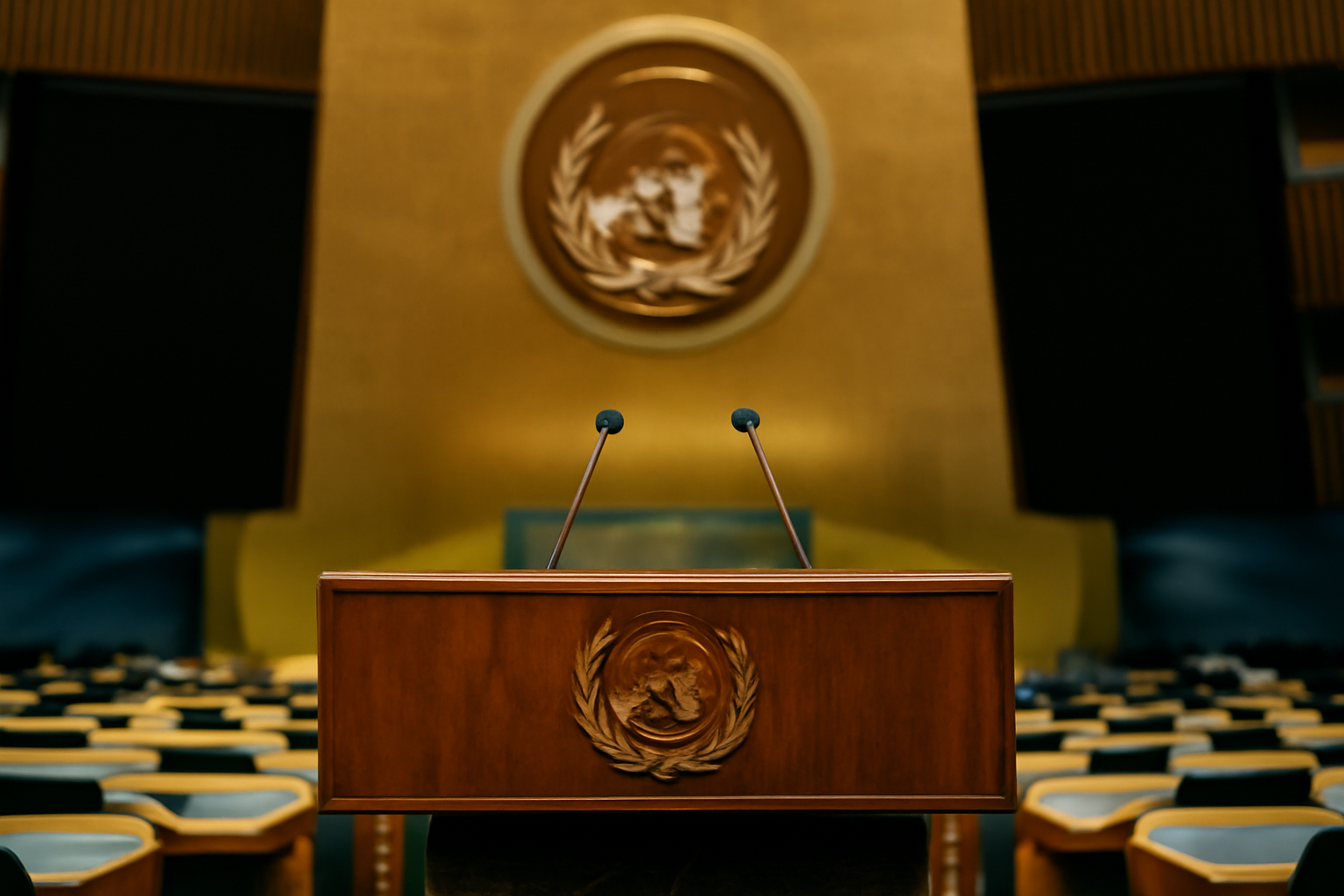
Iranian President Masoud Pezeshkian told the United Nations General Assembly that terrorism accusations belong on his country's critics, not on Iran, according to a report carried by UN News. The available dispatch does not name which critics Pezeshkian meant, does not print the sentence he actually said in quotation marks, and does not link to a transcript of the speech.
What did UN News actually report?
The headline states that Pezeshkian "turns terrorism accusation back on Iran's critics." That is the outlet's own framing of what happened, not a phrase attributed to the Iranian president between quotation marks. Readers get a summary of intent, not his words.
"turns terrorism accusation back on Iran's critics" — UN News headline, as carried by Google News
What's missing from the story as published?
No transcript. No named officials or countries accused of backing terrorism. No response, on the record, from the governments Pezeshkian appears to be targeting. For one head of state accusing others of supporting terrorism at the UN podium, the absence of a direct quote or a primary-document link leaves readers to trust a headline rather than his actual remarks.
Why does the "turns it back" framing matter?
The verb choice does analytical work the story otherwise skips. "Turns... back on" implies rebuttal, strategy, even a scorecard of who's winning the argument. That is a judgment call about intent, and it belongs in labeled analysis, not an unadorned news lede, unless it is lifted straight from Pezeshkian's own phrasing. Without the quote, readers cannot check whether the characterization is fair or whether the story is doing the speech's spin work for it.
What would ordinary sourcing standards ask for here?
Wire-style and UN-affiliated coverage typically pairs a paraphrase with the underlying quote so readers can judge tone for themselves. HTT's own corrections standard treats unattributed characterization — paraphrase presented as if it were near-verbatim, without quotation marks — as exactly the kind of gap that should prompt a follow-up once the full remarks surface, or a correction if the paraphrase turns out to overstate what was said.
By the numbers: what's sourced, what isn't
- 1 outlet credited in the material reviewed for this piece: UN News.
- 0 direct quotes from Pezeshkian appear in that material.
Those two numbers, not any editorial adjective, are the whole case for caution here.
What to watch
Readers looking for the substance behind the headline should watch for an official transcript or UN webcast of the General Assembly session, and for on-the-record responses from the governments Pezeshkian's remarks appear aimed at. Until either surfaces, the claim that he "turned" the terrorism accusation back on named critics rests on the outlet's paraphrase — not on his own words.