news
Curtis Calls for Federal Data Center Transparency Standards
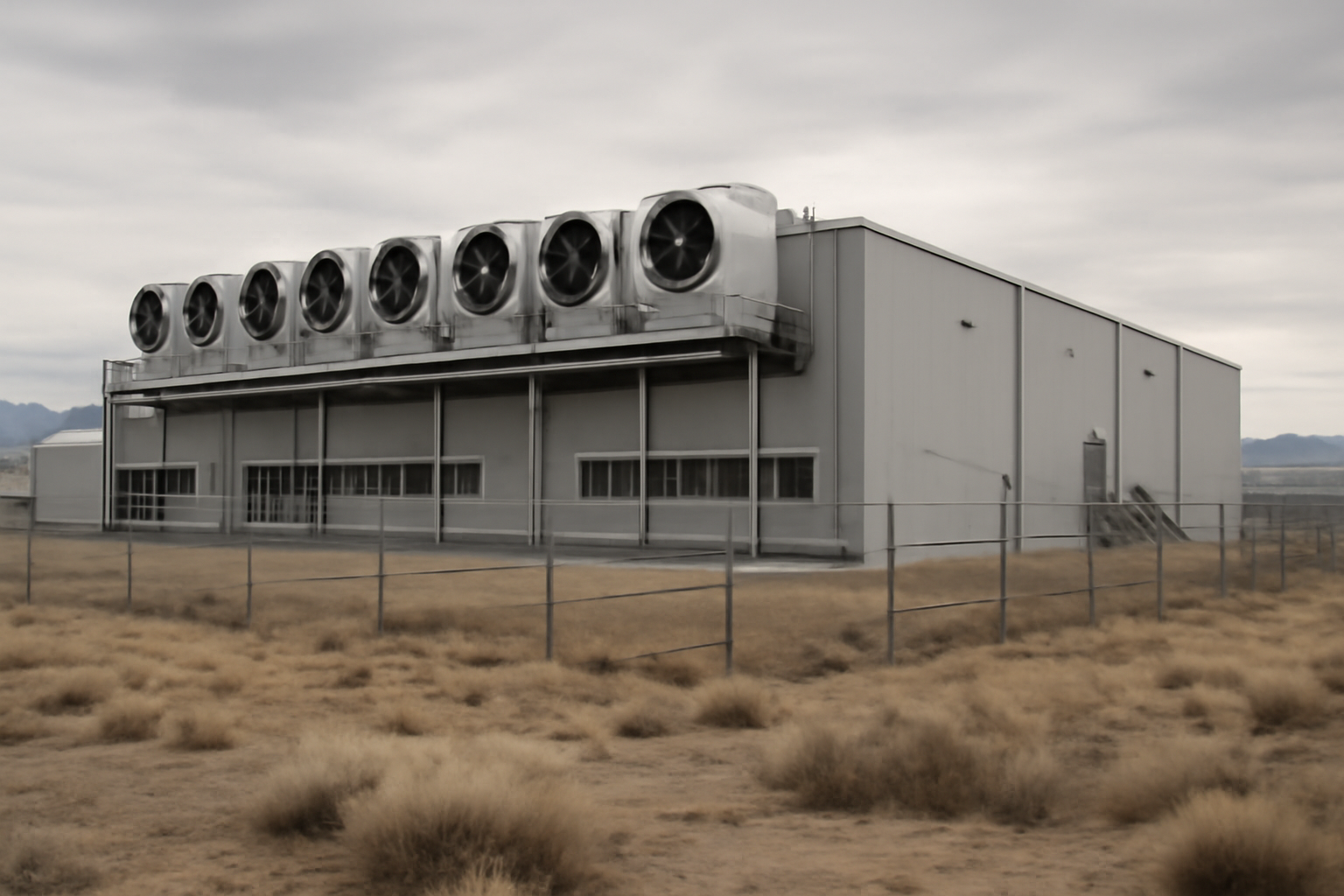
A story out of the Standard-Examiner, carried by Google News, reports that Sen. Curtis is calling for federal transparency standards after a controversy involving a Utah data center. That is the entire shape of the claim available to readers through the aggregator link. No bill number. No hearing date. No company name attached to the project. No quote from Curtis himself.
What Did Curtis Actually Call For?
The aggregator headline attributes a policy position to Curtis — federal transparency standards for data centers — without supplying the mechanism. Readers are not told whether this is proposed legislation, a letter to a federal agency, a floor statement, or a comment to a local reporter. Those distinctions matter enormously in how much weight a reader should put on the word "calls for." A senator introducing a bill is a different kind of news than a senator answering a question at a town hall. The version of the story reachable through Google News does not distinguish between them.
What Specifics Does the Utah Controversy Actually Involve?
Equally absent is any description of the controversy itself. Data center fights in the Mountain West typically turn on a short list of recurring disputes: water drawn for cooling, strain on the regional power grid, property tax abatements, or a community learning about a project after permits were already filed. Which of those applies here is not stated in the material available. Without a project name, a city, or a filing date, "Utah data center controversy" functions as a placeholder rather than a reported fact.
Why Does a Single Aggregator Link Matter?
This is not a complaint about the Standard-Examiner, whose original reporting may well contain the company name, the megawatt figure, and Curtis's own words. It is a complaint about the supply chain of this particular story as it reaches readers through syndication. A Google News redirect is not a substitute for a byline, a dateline, or a quote. When a claim about a sitting senator's policy position travels through an aggregator with no visible text beyond the headline, the burden shifts to the reader to go find the underlying piece — and many will not.
The available report names no company, no megawatt figure, no community meeting, and no sentence from Curtis himself.
How Does This Fit a Pattern on Data Transparency Coverage?
This desk has flagged thin sourcing on data-handling stories before. A September report on a San Francisco airport contractor sharing facial data with federal agencies required tracing a contractor relationship through several layers of disclosure before the actual data-sharing arrangement became clear. Around the same time, this desk published a note on correction standards arguing that accountability journalism about data infrastructure has to meet a higher bar precisely because the underlying technical claims are hard for most readers to independently verify. A senator's call for "federal transparency standards" on data centers sits in exactly that category: a policy claim about transparency that itself arrives with none.
What Would a Fuller Accounting Look Like?
A complete version of this story would name the data center project and its operator, state what specifically triggered local objection, quote Curtis's own language rather than paraphrase it, and specify whether "federal transparency standards" means a bill, a request to a regulator, or a public statement. None of that is unreasonable to ask for in a story about a sitting U.S. senator proposing a new disclosure regime for an industry that already draws scrutiny over water use and power demand. Readers who want the fuller picture should go to the Standard-Examiner's original reporting rather than the aggregator summary, and this desk could not independently verify the headline claim beyond what the aggregator supplied.
Who Bears the Cost of That Gap?
Syndication is supposed to widen the audience for accountability reporting, not dilute it. When the only version a reader encounters is a redirect link with no visible article text, the aggregator has effectively stripped away the sourcing that justified the headline in the first place. The reader cannot check whether "calls for" means a press release, a bill text, or a quote lifted from a hallway interview, because none of that travels with the link. That gap does not fall on the Standard-Examiner, which presumably reported the underlying facts; it falls on whichever platform decided a headline fragment was sufficient to carry a claim about federal policy on its own.
Is There a Fix Short of Rewriting the Story?
The simplest remedy does not require new reporting at all. It requires attribution discipline: a sentence stating plainly that the claim comes from a single aggregator-routed headline, that no bill number or hearing record was located, and that readers should treat "calls for" as a paraphrase until the original quote surfaces. That is the standard this desk is applying here, and it is the standard any outlet citing a senator's policy position ought to meet before running the claim as settled fact.