politics
New York Times Headline Claims More Than Its Story Shows
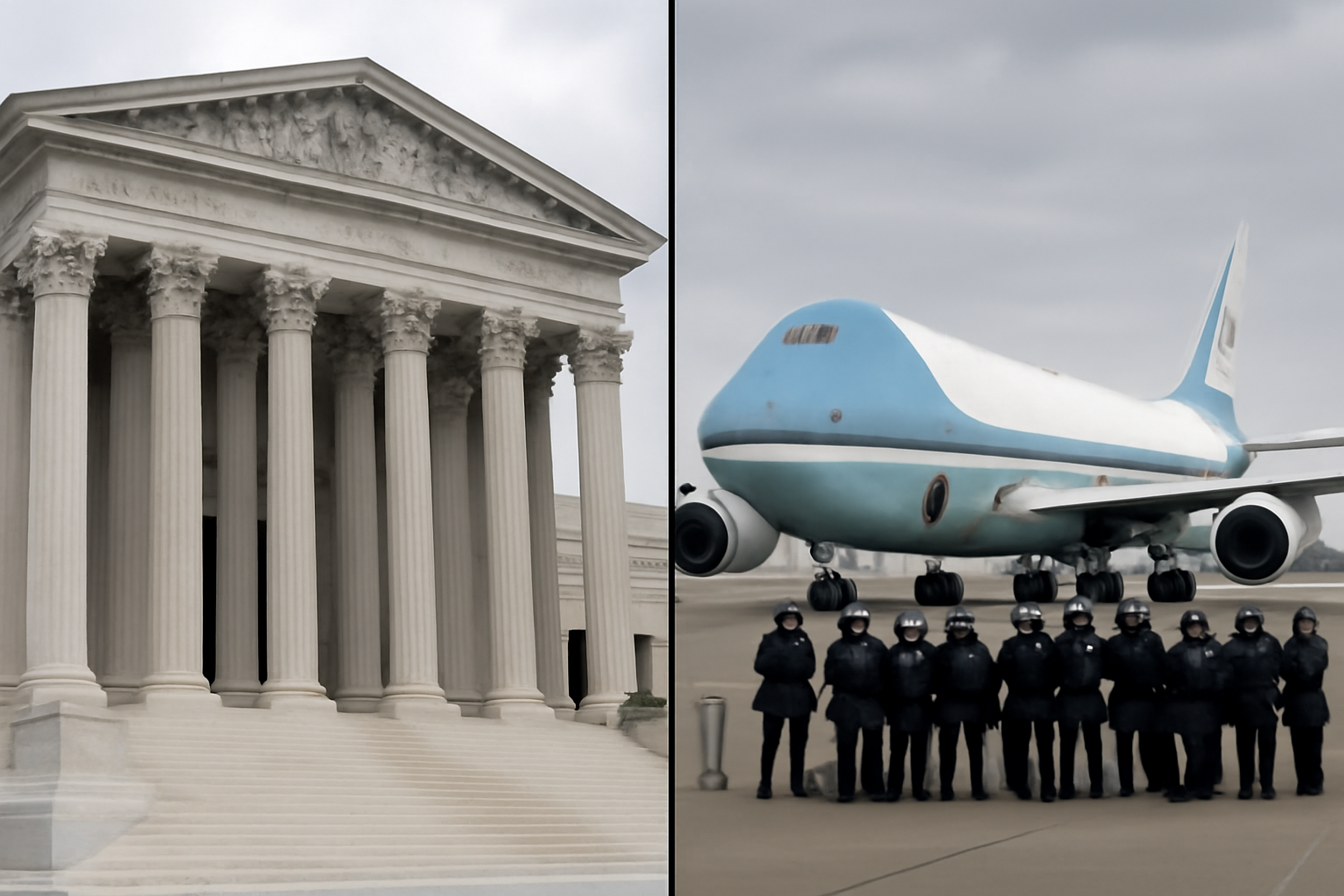
A headline that reads "Why a Court Order Didn't Stop Trump From Keeping Reporters Off Air Force One" makes a specific causal claim: a court ordered something, and that order failed. That is a testable assertion. It needs a docket number, a judge's name, a date the order was issued, and a date it was supposedly violated. None of those appear in the public-facing version of the story as it circulates on Google News.
What does the headline actually assert?
The construction "why X didn't stop Y" presupposes both that X happened and that it was supposed to stop Y. Readers are asked to accept, before a single fact is supplied, that a court order existed, that it covered press seating on a specific aircraft, and that it was not followed. The headline does the work a lede paragraph is supposed to do, except without citations.
What facts are missing from the public preview?
No court name. No case number. No date of the ruling. No statement from the administration about why reporters were excluded, and no count of how many outlets or reporters were affected. A dataset-literate reader cannot verify a claim that has no instance count attached to it. The Times may well have all of this in the full story; the aggregated version readers see first does not carry it.
Why does the "why" framing matter here?
A "why" headline tells a reader the causal mechanism is already established and only the explanation is pending. That is a stronger rhetorical move than a "what happened" headline, and it should come with a correspondingly stronger evidentiary load up front, not buried past a paywall or several paragraphs down. Readers deciding whether to click, or whether to repeat the claim elsewhere, are working from the headline and teaser alone.
What would a fully sourced version need to show?
At minimum: the order's docket number and issuing court, the date it took effect, the date of the alleged noncompliance, and a named spokesperson's response or a documented refusal to respond. A corrections framework, like the one outlined in this outlet's own accuracy standards, exists precisely because headlines that assert causation without attached figures are the ones most likely to need a fix later.
What does this pattern mean for readers of aggregated news?
Most readers encounter this story through a feed, not the Times' own site, which means the headline is doing nearly all the persuasive work most people will ever absorb. Until the underlying numbers — the order's date, the exclusion count, the agency response — are visible in that same feed, the claim remains a headline, not a finding.
Questions
Did a court actually order reporters be allowed on Air Force One?
The headline asserts a court order existed, but the publicly aggregated version of the story does not include the docket number, court name, or ruling date needed to verify that claim independently.
Why does the missing date and docket number matter?
Without a case number or date, readers cannot check the underlying order themselves or confirm when any alleged noncompliance occurred, leaving the headline's causal claim unverified at the point most people see it.