politics
NYT Report on White House Press Bans Omits Basic Details
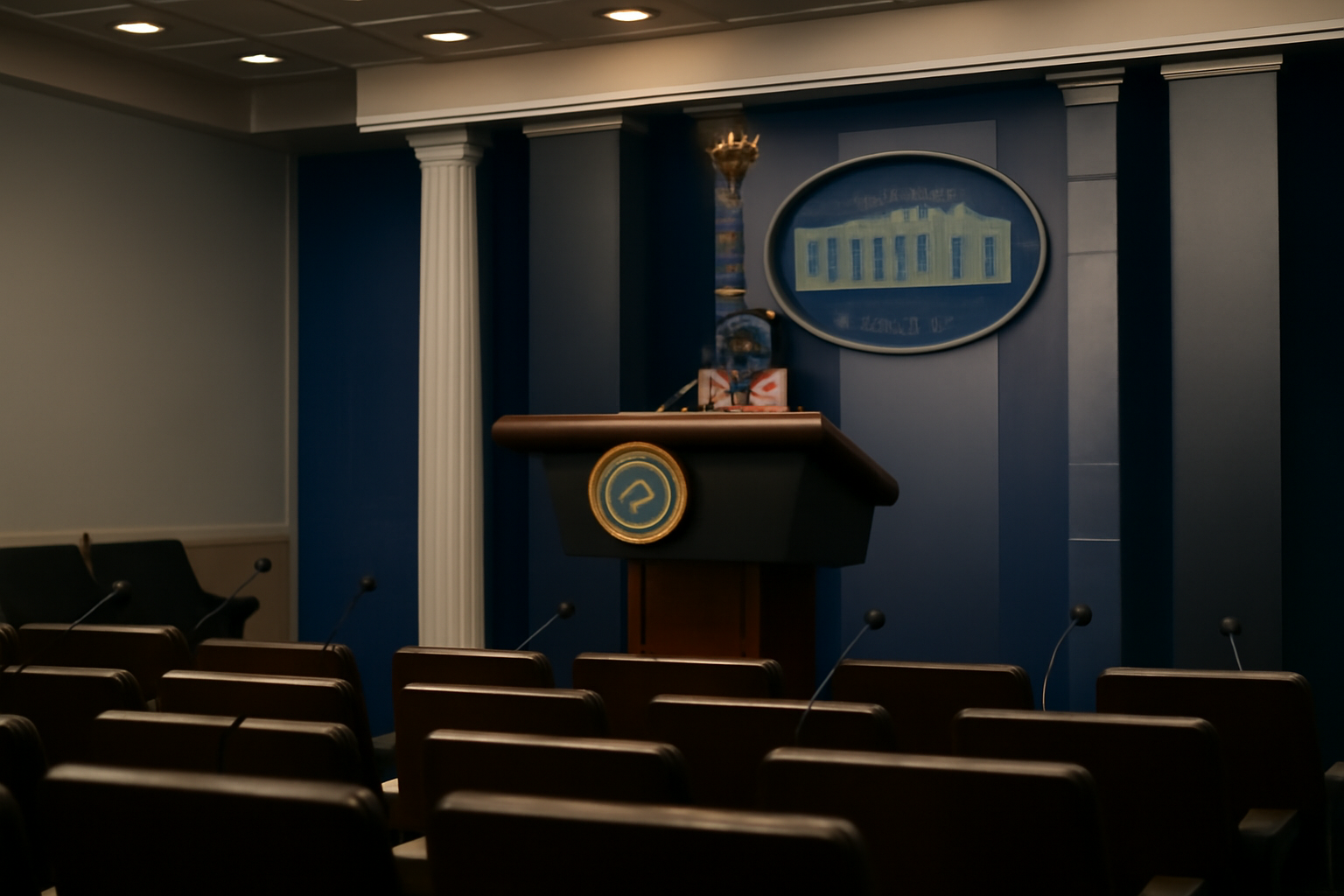
The New York Times' rolling update on Trump administration press relations reports that reporters from CNN, Politico and MS NOW have been barred from White House access. The item, filed under the paper's ongoing "Trump Administration Updates" tracker, does not name a single reporter affected, specify what kind of access was revoked, or say when the bars took effect.
What did the Times actually report?
The headline and framing describe an escalation between the administration and "major news outlets," per the Times' live-update format. That format is built for speed, not depth, and it shows: readers get an outlet list and a verb — "barred" — with no supporting detail about the mechanism. Was it a hard pass revoked, a pool rotation seat lost, or a briefing-room exclusion? The story as summarized does not say.
Which reporters, and from what, exactly?
An outlet name is not a person. CNN, Politico and MS NOW each employ multiple journalists who cover the White House on any given day. A report that says an outlet was "barred" without naming which correspondent lost which credential leaves readers unable to verify the claim against, for instance, a press pool roster or a White House Correspondents' Association statement. The Times piece, at least in the form aggregated here, supplies neither.
Has the administration explained the decision?
No administration statement, spokesperson quote, or press office response appears in the material reviewed. A dispute framed as retaliation for coverage the administration "disputes" needs the administration's own words attached to that framing, in the same story, not left to reader assumption. Absent that, the causal claim — that this is retaliatory rather than procedural — is the Times' characterization, not a documented fact.
What is MS NOW, and does the story explain it?
The outlet name MS NOW appears in the report without context for readers who may not immediately place it. A wire-style update aimed at a broad audience ordinarily identifies an outlet on first reference. Skipping that step is a small thing, but it is consistent with a pattern in fast-turn live-blogging: speed over legibility.
What standard should this kind of story meet?
HTT News' own guidance on corrections and sourcing holds that contested claims need attribution in the same sentence and that named subjects, not category labels, are what allow a claim to be checked, a standard laid out in Crafting Corrections: Ensuring Accuracy and Accountability. A press-access story is, structurally, a press-freedom story, and press-freedom stories carry an obligation to name names: which credential, whose byline, whose signature is on the decision. Until a fuller accounting surfaces — from the Times, from the White House press office, or from the outlets themselves — the claim that CNN, Politico and MS NOW reporters have been barred remains an outlet-level assertion rather than a documented, individually verifiable one.